History behind the finds

The history behind Potomac River glass and pottery

The glass and pottery fragments on Virginia’s Potomac River shoreline come from everyday plates, bowls, vessels and bottles, many of them 150–200+ years old. Water and sand soften their edges, but their colors, patterns and maker’s marks still tell a story.

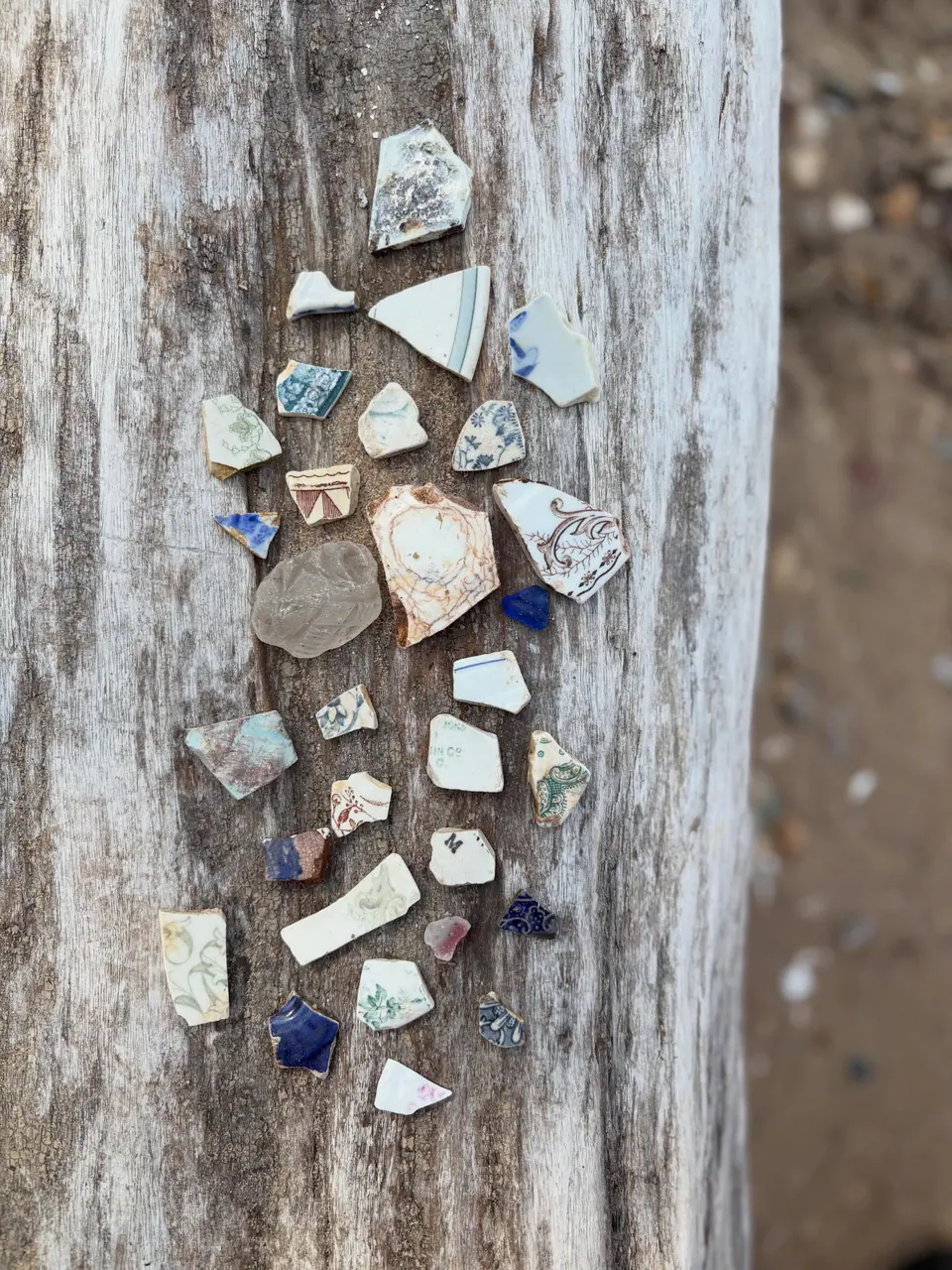
Dozens of small pottery and glass fragments in blues, greens and creams arranged on a weathered driftwood plank

Key facts

Key facts about the Potomac and the finds
Where the finds come fromThe Potomac River shoreline in Virginia
Tidal PotomacFrom Little Falls, near Washington, D.C., more than 100 miles to the Chesapeake Bay
Width at the mouthAbout 11 miles
Typical age of fragmentsMany are 150–200+ years old
Transfer printing beganEngland, from the 1750s
Royal arms design change1837, when Queen Victoria came to the throne

The river

Why does the Potomac hold so much history?

For centuries the Potomac was a working river. Communities, farms, wharves and industries grew along its banks, and everyday household goods made their way into the water.

Below Little Falls, just upstream of Washington, D.C., the Potomac becomes a tidal estuary. It runs more than 100 miles to the Chesapeake Bay and widens to about 11 miles at its mouth (ICPRB (opens in a new tab); USGS (opens in a new tab)).

Tides and currents slowly move sand and stones along the shoreline, uncovering fragments that may have been buried for generations.

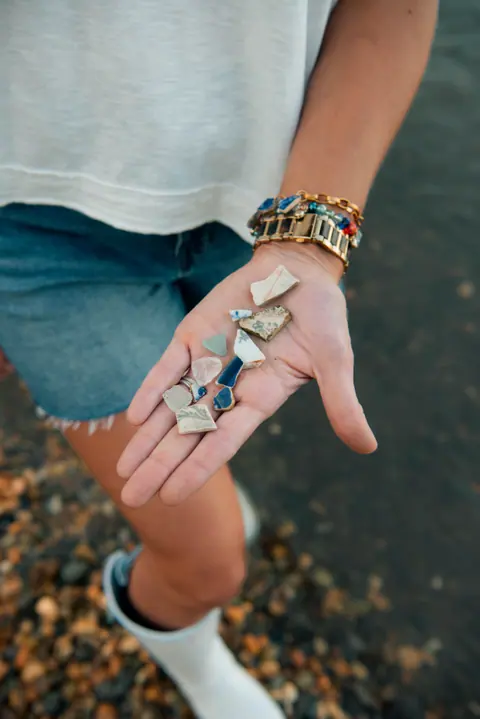
A hand holding a mix of blue transferware shards, patterned pottery and frosted river glass
One walk Transferware, patterned pottery and river glass

The region

What is the Tidewater?

The Tidewater is defined as the part of Virginia where the rivers rise and fall with the tides. Geographers describe it as the low coastal plain east of the Fall Line, crossed by the tidal stretches of the Potomac, Rappahannock, York and James rivers (VirginiaPlaces (opens in a new tab)).

Where exactly the Tidewater ends is debated, but Virginia law is specific. The Chesapeake Bay Preservation Act’s definition of “Tidewater Virginia” includes Prince William County, home of Dumfries and of Tidewater Trove (Va. Code § 62.1-44.15:68 (opens in a new tab)).

That heritage is where the business gets its name. In Rachel’s words:

Tidewater Trove's name connects Virginia's Tidewater heritage with the tidal shores of the Potomac River near Dumfries and Occoquan, where I gather the historic glass and pottery that inspire each creation.

Rachel Knotts, founder and artist

Blue & white

What is transferware?

Transferware is pottery decorated by transfer printing: a design engraved on a copper plate is printed onto tissue paper, then pressed onto the ceramic before glazing.

The process was developed in England from the 1750s, much of it in Staffordshire potteries meeting demand for affordable patterned tableware. Blue-and-white transferware reached its peak popularity in the first half of the 1800s, and America was a major market for it (Transferware Collectors Club (opens in a new tab)).

That is why blue-and-white fragments are among the most common, and most loved, finds along the river.

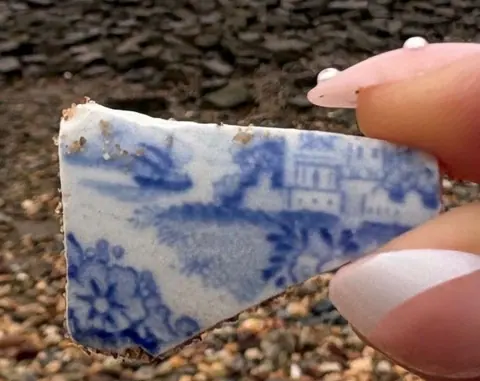
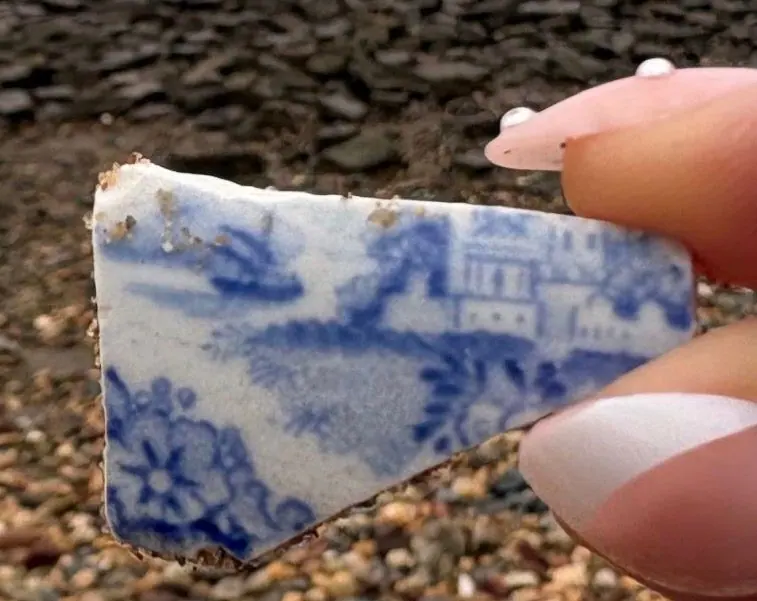
A blue-and-white transferware shard showing a printed landscape scene, held between two fingers
Find Printed landscape · blue-and-white transferware
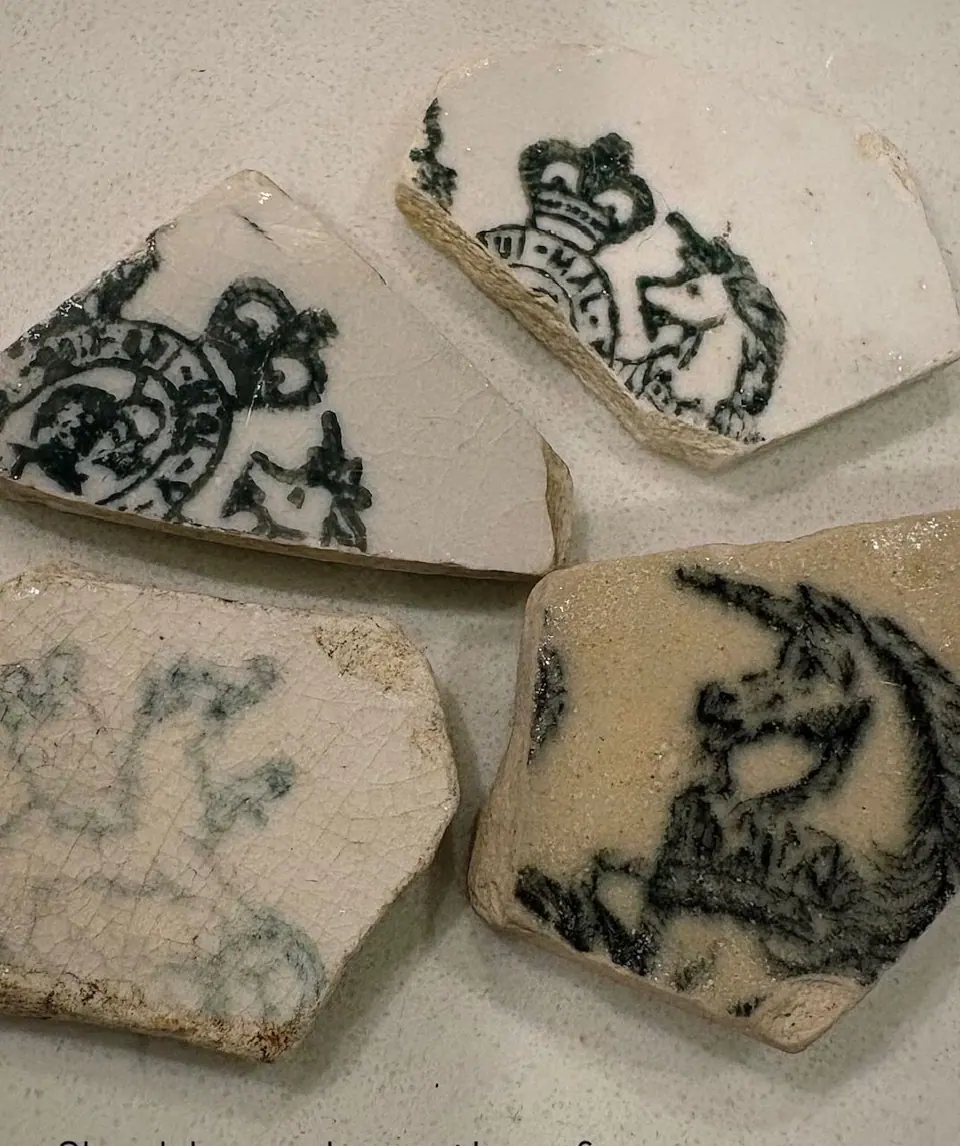
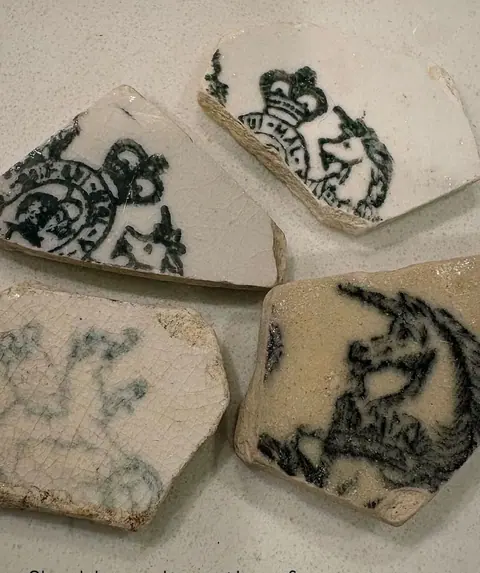
Four pottery shards laid on a table, each printed with part of a crest, crown or unicorn maker's mark
Finds Crowns, shields and a unicorn from several pieces

Maker’s marks

What do the crowns, crests and unicorns mean?

A backstamp, or maker’s mark, is the printed or impressed mark on the underside of a plate or dish. It usually names the pottery and sometimes the pattern.

Many English potters of the 1800s and early 1900s used a version of the British royal coat of arms in their marks: a shield held by a lion and a unicorn beneath a crown. Some American potters did the same (thepotteries.org (opens in a new tab); American potters’ use of the arms (opens in a new tab)).

The design of the arms changed in 1837, when Queen Victoria came to the throne. Details like the shield can hint at whether a piece is older or newer than that date.

River glass

What is river glass?

River glass is broken glass, often from old bottles and jars, that has been tumbled by water and sand until its edges are smooth and its surface is frosted.

Its colors are clues to its past. Clear glass and soft greens and browns came from everyday bottles and jars. Along the Potomac, river glass turns up right alongside pottery, and Rachel uses both in her designs.

Because every fragment has been shaped differently by the river, no two Tidewater Trove pieces can ever be the same. See river glass and pottery pieces in the shop.

From the cabinet

Some of Rachel’s finds

A few fragments from the Potomac shoreline and what their markings suggest.

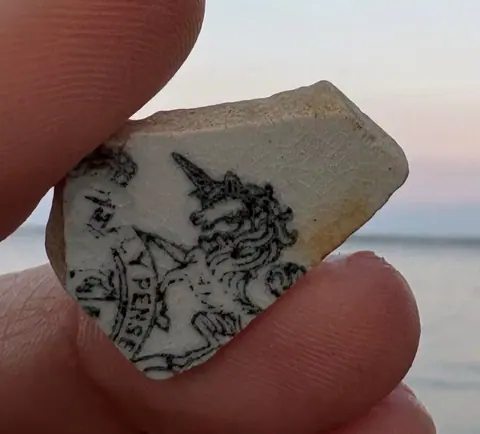
A pottery shard held up against the sky, printed with a rearing unicorn from a coat-of-arms maker's mark

Find No. 01 · Printed maker's mark · pottery

The Unicorn

This rearing unicorn most likely comes from a backstamp, the maker's mark printed under a plate or dish. Many 1800s English potters, and some American ones, used a version of the British royal coat of arms: a lion and a unicorn holding a shield beneath a crown.
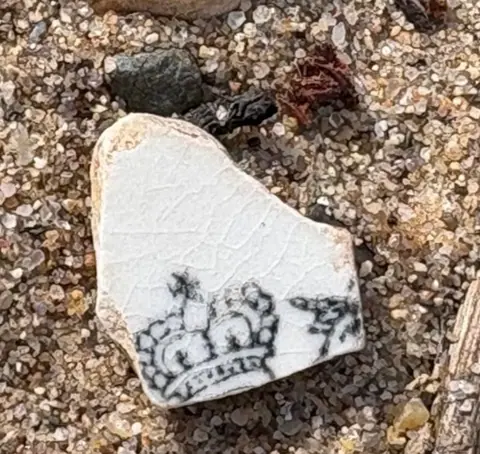
A crackled white pottery shard printed with a small black crown, resting on coarse sand

Find No. 02 · Printed maker's mark · pottery

The Crown

A small crown from the top of a printed maker's mark. The royal arms changed in 1837, when Queen Victoria came to the throne, so the details in a full mark can hint at whether a piece is older or newer than that.

Four pottery shards laid on a table, each printed with part of a crest, crown or unicorn maker's mark

Find No. 03 · Four backstamp fragments

A Set of Crests

Crowns, shields and a rearing unicorn from several different dishes. Finding part of a crest is a clue to where, and roughly when, a piece was made.

A blue-and-white transferware shard showing part of a printed landscape scene, held between two fingers

Find No. 04 · Blue-and-white transferware

Printed Landscape

A printed landscape scene, still crisp after years in the water.

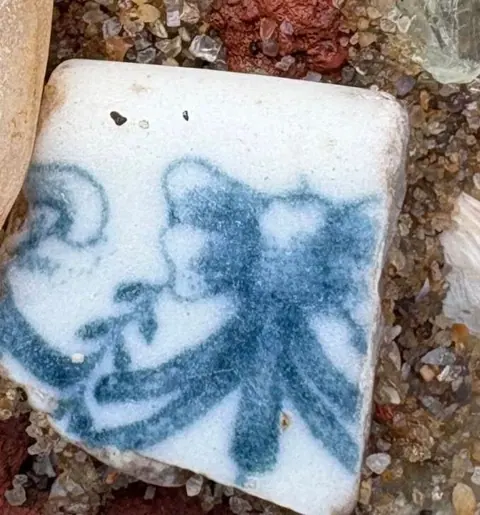
A square white pottery shard with a bold cobalt-blue floral pattern resting on sand and pebbles

Find No. 05 · Blue-and-white pottery

Cobalt Flowers

Bold cobalt blue is one of the most loved colors on the shoreline. Blue-and-white transferware was at its most popular in the first half of the 1800s, and America was a major market for it.

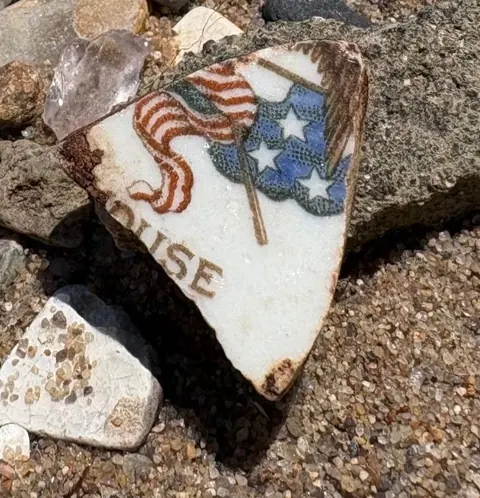
A white pottery shard printed with red, white and blue American flags and part of a word, lying on sand

Find No. 06 · Printed pottery

Stars & Stripes

A white shard printed with red, white and blue flags and a few letters that are still readable. Every fragment keeps a handful of clues: a pattern, a color, a scrap of lettering.

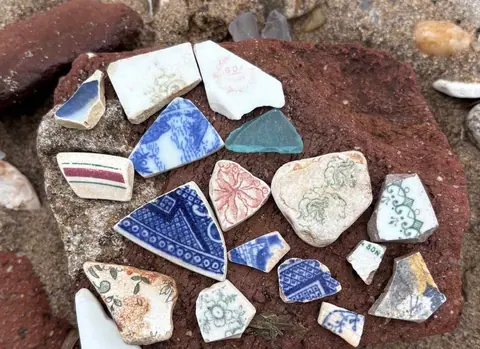
A spread of pottery shards on a red rock: blue transferware, floral prints, a red-banded rim and plain white pieces

Find No. 07 · Pottery from one search

A Morning's Finds

Blue transferware, floral prints, a red-banded rim and plain white pieces, laid out after a single search of the shoreline. Each one is cleaned and chosen for its color, pattern and markings before it becomes a piece.

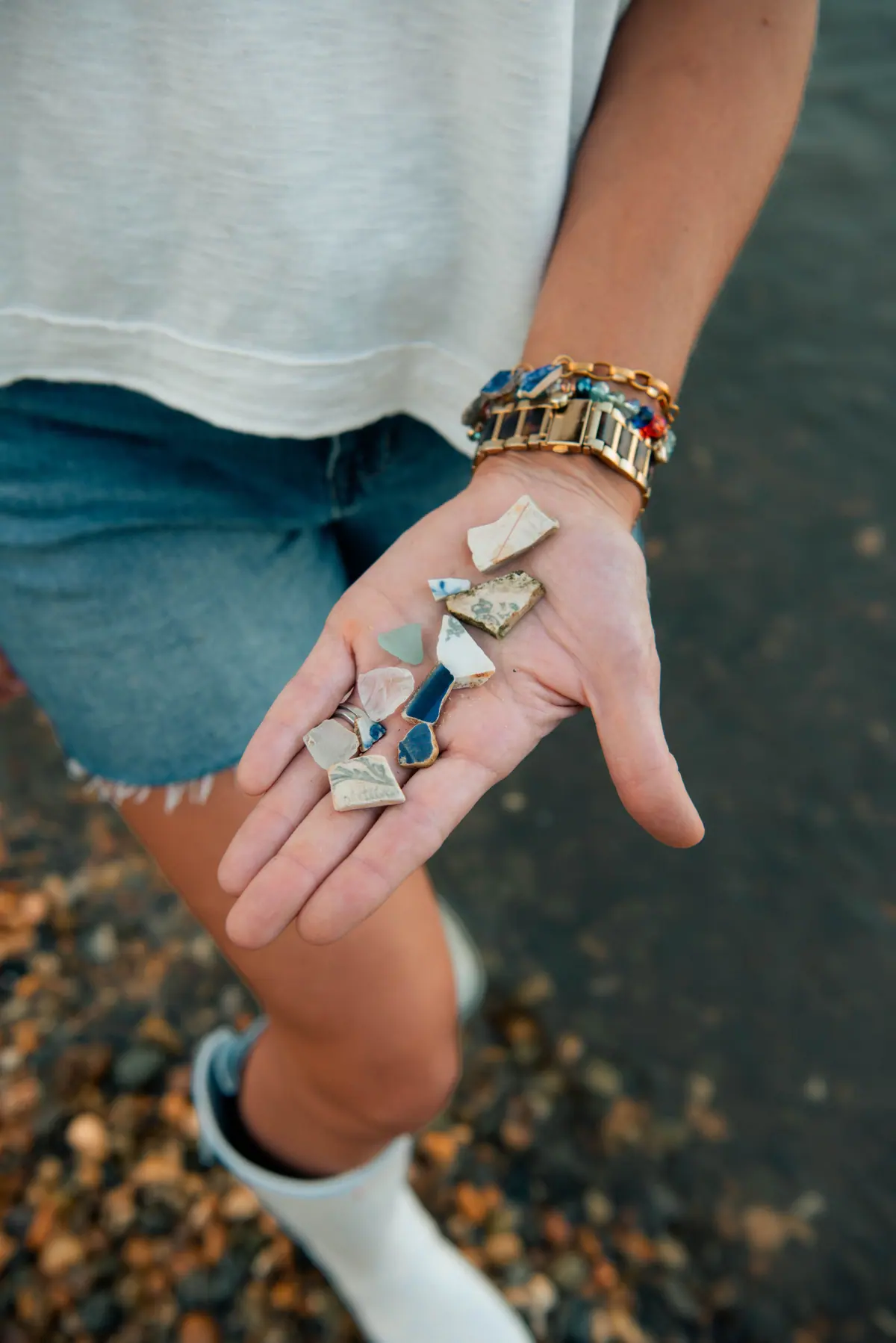
An open hand holding blue-and-white pottery shards and pieces of frosted river glass

Find No. 08 · Frosted glass + pottery

River Glass

River glass is broken glass, often from old bottles and jars, tumbled by water and sand until its edges are smooth and its surface is frosted. Rachel uses it right alongside pottery.

Good to know

Questions about river finds

How old are the fragments found along the Potomac?

Many of the fragments Rachel finds date back 150 to 200+ years. A small shard is hard to date exactly, so patterns, glazes and any surviving maker’s mark are the best clues.

What is transferware?

Transferware is pottery decorated by transfer printing: a design engraved on a copper plate is printed onto tissue paper, then pressed onto the ceramic before glazing. The process developed in England from the 1750s and made patterned tableware affordable for everyday households.

Why do some shards have a lion, unicorn or crown on them?

Many English and some American potteries of the 1800s and early 1900s printed a version of the British royal coat of arms in their maker’s marks: a lion and a unicorn holding a shield beneath a crown. Part of one on a shard is a clue to where, and roughly when, the piece was made.
What makes river glass frosted?

Years of tumbling in water and sand wear down the glass surface and round its edges, giving river glass its soft, frosted look.

Is Dumfries part of the Tidewater?

Yes, by Virginia law. The Chesapeake Bay Preservation Act defines “Tidewater Virginia” to include Prince William County, where Dumfries is (Va. Code § 62.1-44.15:68 (opens in a new tab)).

Is it legal to collect glass and pottery from the Potomac shoreline?

It depends on who owns or manages the shoreline. Many parks and historic sites prohibit removing objects. Always check the rules for the specific beach, park or property before you collect anything.

Wear a piece of this history

Every Tidewater Trove piece is built around a real fragment from the Potomac.